

Drowsy driving can happen at any time, though time changes can certainly play a large factor. As we move into March—with busy schedules, shifting daylight hours, and unpredictable weather—it’s a good time to pause and evaluate how alert we really are when we’re driving.
Most drivers understand the risks of distracted or impaired driving. What often gets overlooked is this: fatigue can impair you in similar ways—without you even realizing it.

The Dangers of Drowsy Driving
Driving requires constant decision-making. You’re adjusting speed, watching traffic patterns, reacting to signals, and monitoring pedestrians—all at once.
When you’re tired, your brain simply cannot process information as quickly or accurately.
Here’s what happens when fatigue sets in:
Slower Reaction Time
Drowsiness delays how quickly you respond to:
- Brake lights ahead
- Sudden lane changes
- Animals entering the roadway
- Traffic signals changing
Even a one-second delay can be the difference between a near-miss and a rear-end collision.
Impaired Judgment
Fatigue affects:
- Speed control
- Following distance
- Risk assessment
- Decision-making at intersections
Drivers who are overly tired are more likely to misjudge gaps in traffic or drift into unsafe situations.
Reduced Awareness
Microsleeps—brief, involuntary lapses in attention—can last just a few seconds. At highway speeds, that means traveling the length of a football field without full awareness.
Lane Departure and Drifting
Many fatigue-related crashes involve vehicles:
- Crossing the center line
- Drifting onto the shoulder
- Rear-ending stopped traffic
These accidents often happen with little to no braking—a clear indicator the driver wasn’t fully alert.
Drowsy Driving by the Numbers
While many fatigue-related crashes go underreported, national safety data consistently shows that thousands of collisions each year are linked to drowsy driving. Because there’s no breath test for fatigue, the true number is likely higher.
High-risk times include:
- Late night and early morning hours
- Mid-afternoon (the “afternoon slump”)
- After long work shifts
- During long road trips
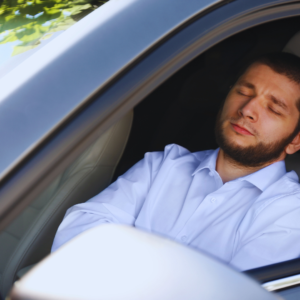
The Collision Risks of Driving Tired
When fatigue leads to a crash, the damage can be more severe than people expect.
Why?
Because tired drivers often don’t react in time to brake or swerve. That means:
- Higher impact speeds
- More extensive front-end damage
- Greater risk of structural damage
- Increased likelihood of airbag deployment
Even low-speed rear-end collisions can result in hidden damage beneath bumpers and body panels. Modern vehicles are designed with crumple zones and advanced safety systems—but those systems require precise repair after an accident to ensure they function properly again.
Signs You Should Not Be Driving
Many drivers try to push through exhaustion. The problem is, your body often signals fatigue before your mind acknowledges it.
Warning signs include:
- Frequent yawning
- Heavy eyelids
- Drifting from your lane
- Missing exits or traffic signs
- Difficulty remembering the last few miles driven
If you experience any of these, it’s time to pull over safely and rest. Rolling down a window or turning up the radio is not a reliable solution.
Seasonal Factors That Increase Fatigue
As winter transitions into spring, several factors can contribute to tired driving:
- Lingering winter illnesses
- Reduced daylight patterns
- Early morning frost or fog requiring extra focus
- Busy spring schedules and travel
All of these can quietly increase your crash risk if you’re not fully alert.
If Fatigue Leads to a Collision
Even careful drivers can find themselves in an accident. If that happens:
- Make sure everyone is safe and call for help if needed.
- Document the scene and exchange information.
- Notify your insurance company.
- Have your vehicle inspected by a professional collision repair shop.
Damage from fatigue-related crashes may look minor on the surface but can involve:
- Impact to structural components
- Misaligned panels
- Sensor and camera disruption
- Compromised crumple zones
Proper auto body repair is essential to restore your vehicle’s safety systems and structural integrity.

Staying Alert Protects More Than Your Schedule
We all have places to be. But arriving safely matters more than arriving quickly.
Simple habits can reduce drowsy driving risk:
- Prioritize consistent sleep
- Take breaks every two hours on long drives
- Share driving responsibilities when possible
- Avoid driving during peak fatigue hours
Your vehicle’s safety features are designed to protect you—but they work best when you’re fully alert behind the wheel.
Fatigue is more than an inconvenience. It’s a real safety risk that can lead to serious collisions and costly repairs.
Staying rested helps protect your passengers, others on the road, and the structural integrity of your vehicle. And if the unexpected happens, choosing quality collision repair ensures your vehicle is restored to pre-accident safety standards—so you can drive forward with confidence.